How to Find and Request Free Items Nearby · Phantstore
How to Find and Request Free Items Nearby
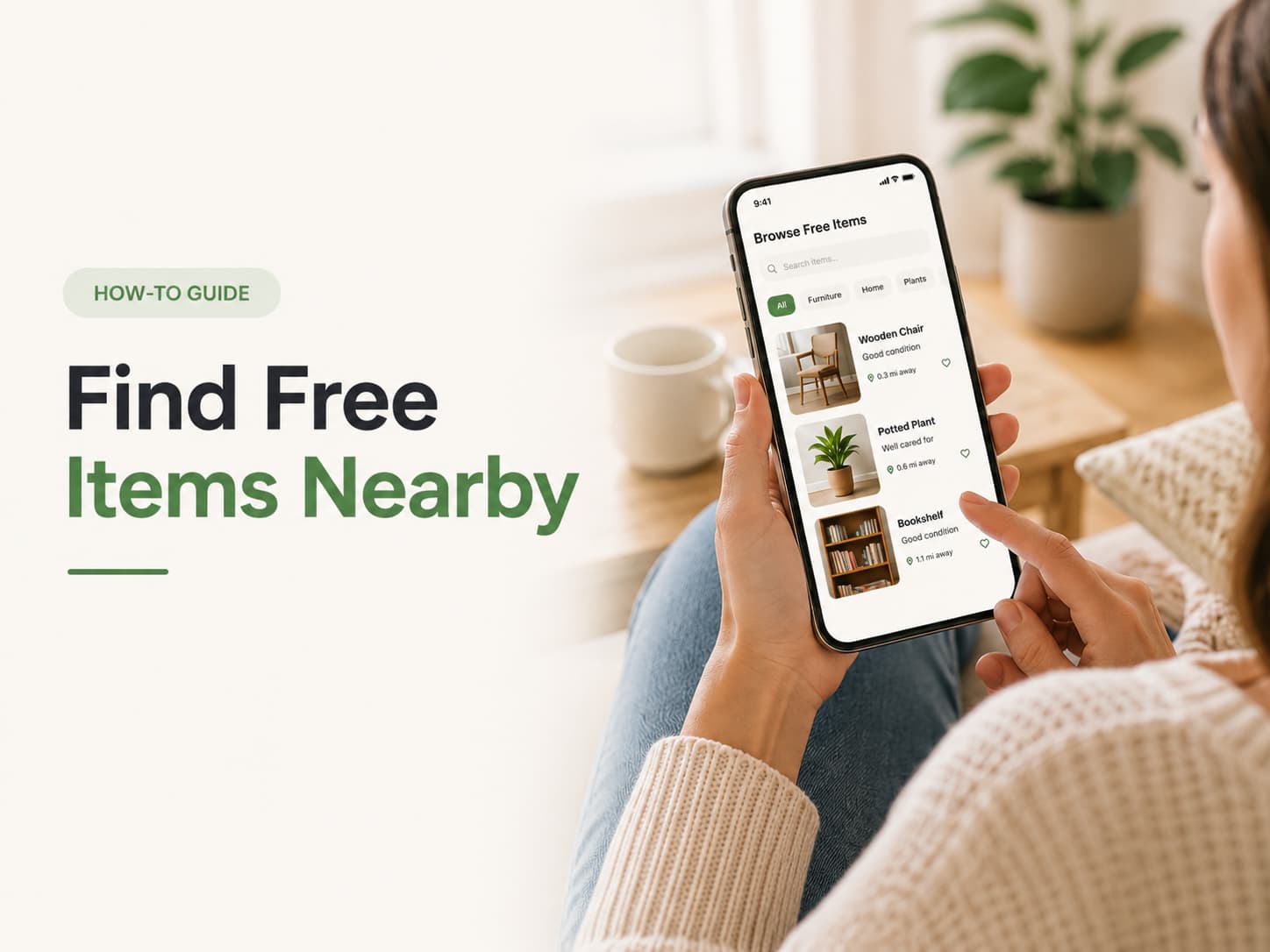
Looking for something useful nearby? Learn how to browse free items on Phantstore, read listings carefully, save items, request responsibly, and coordinate pickup through in-app messages.
Y
Yazan
Yahyaa Türkmenn
Finding something useful for free can be exciting.
A neighbor may be giving away a desk, a lamp, a stack of books, children’s items, storage boxes, kitchen tools, or something else you need. Phantstore helps you discover those items nearby and request them directly through the platform.
But a good request is not just about clicking a button quickly.
Before you request an item, you should understand what is being offered, whether it fits your needs, whether you can collect it, and whether the pickup arrangement is realistic for both people.
This guide explains how to find, evaluate, save, request, and collect free items responsibly on Phantstore.
Browsing is useful when you are open to discovering something helpful but do not have one exact item in mind. You might notice household goods, furniture, books, clothing, games, tools, or other useful things shared by people nearby.
As you browse, pay attention to:
The item title
The photos
The condition summary
The approximate location
The category
The date or freshness of the listing
Whether the item is still available
Any pickup notes from the donor
Do not judge an item only by the first photo. Open the full listing before deciding whether to request it.
Use simple words first. If the search is too narrow, try a broader term. For example, search for “chair” before “wooden dining chair with arms.”
You can also browse by category or filters when available. Filters help narrow the list, but they should not replace reading the full item details.
A search result tells you that an item might be relevant. The item page tells you whether it is actually suitable.
Use the map as an approximate discovery tool
Phantstore may show item discovery through an approximate location or map view.
Use the map to understand the general area where an item is available. This helps you decide whether pickup is practical before sending a request.
Do not treat the public map position as an exact address. The public location is meant to support local discovery without immediately exposing private pickup details.
Before requesting, ask yourself:
Is this general area realistic for me?
Can I travel there safely and on time?
Can I transport the item from that area?
Do I need help carrying it?
Does the item require a vehicle or special planning?
If the approximate area is already too far away, it is better not to request the item.
Open the full item listing
Before requesting, read the full listing carefully.
A responsible receiver should review:
The complete title
Every photo
The written description
The item condition
Measurements or size details
Included or missing parts
Pickup constraints
Approximate location
Donor notes
Any visible signs of wear or damage
The goal is not to find a perfect item. Many shared items are used. The goal is to understand what is being offered before you ask someone to reserve time for you.
If the listing says an item is scratched, missing a part, heavy, untested, or difficult to move, take that seriously.
Look closely at the photos
Photos can answer questions that the title does not.
Check whether the photos show:
The full item
Important details
Damage or wear
Included accessories
Scale or size
The actual item rather than a generic image
Be careful when photos are too dark, blurry, cropped, or incomplete. You can still request clarification, but you should not assume the item is in better condition than shown.
Do not ask the donor to guarantee something that is not visible or described. If a detail matters to you, ask a clear question before arranging pickup.
Read the condition honestly
Condition details are one of the most important parts of a listing.
Look for information such as:
New, used, worn, damaged, or incomplete condition
Whether the item works
Whether it has been cleaned
Whether parts are missing
Whether there are stains, scratches, cracks, or dents
Whether measurements are included
Whether accessories are included
If a listing does not include enough condition information, you can ask politely.
For example:
Hi, I’m interested in the desk. Could you please confirm the approximate width and whether it has any major damage?
A clear question is better than a rushed request.
Decide whether the item truly fits your need
Before sending a request, pause for a moment.
Ask yourself:
Do I actually need this item?
Do I have space for it?
Is the condition acceptable to me?
Can I collect it within the donor’s timing?
Can I transport it without difficulty?
Have I read the full listing?
Am I likely to follow through?
It is better to save an item and think than to request something you may not collect.
Requesting too many items at once can create unnecessary pressure on donors and may lead to cancellations or no-shows.
Save items you are considering
Saved items are useful when you want to compare options before requesting.
You might save an item when:
You are interested but need to check measurements
You need to confirm transport
You want to compare similar items
You are waiting to see whether your schedule allows pickup
You want to return to the listing later
Saving an item does not reserve it. Another receiver may still request or collect it.
Use saved items as a shortlist, not as a way to hold items you are unlikely to collect.
Check the donor profile and reputation
Before requesting or arranging pickup, review the donor’s available profile information.
A profile may help you understand whether the member has completed previous exchanges, received reviews, or participated responsibly on the platform.
Profile and reputation information can be useful signals, but they are not guarantees. A positive profile does not remove the need to read the listing carefully, communicate clearly, and make appropriate pickup arrangements.
If something feels unclear, ask a question. If something feels uncomfortable, you do not have to continue.
Send a thoughtful request
A good request is short, clear, and respectful.
It should show that you understand the item and can realistically collect it.
A strong request might say:
Hi, I’m interested in the small bookshelf. I read the description and saw the scratches in the photos. I can collect it on Tuesday evening or Wednesday afternoon if either works for you. Thank you.
This is better than:
I want this.
Or:
Give it to me today.
A thoughtful request can include:
The item name
Confirmation that you read the description
A realistic pickup window
A relevant question if needed
A polite tone
Avoid pressure, guilt, urgency, or repeated messages.
Ask questions before pickup, not during confusion
If an important detail is missing, ask before arranging the pickup.
Reasonable questions include:
What are the approximate measurements?
Is the item heavy?
Are all parts included?
Is it still available?
Is pickup possible during a specific time window?
Is there anything not shown in the photos?
Will I need a vehicle or another person to help carry it?
Avoid asking for unnecessary personal information. You do not need the donor’s full address, phone number, or private details before the item is accepted and pickup is being arranged.
Keep the conversation focused on the item and the handover.
Wait for the donor’s response
Sending a request does not mean the item is yours.
The donor may receive several requests and may need time to choose a receiver. They may consider timing, pickup practicality, request clarity, and profile information.
Do not repeatedly message the donor if they have not answered immediately.
If the donor chooses someone else, respect the decision. Free local sharing works best when members avoid entitlement and pressure.
You can continue browsing or save similar items for later.
Coordinate pickup through in-app messages
When a donor accepts your request or continues the conversation, use Phantstore’s in-app messages to coordinate the pickup.
Confirm:
The exact item
The agreed day
The agreed time or time window
The mutually agreed pickup place
Whether the item needs special transport
Whether you need help carrying it
What to do if either person is delayed
Keeping the conversation inside Phantstore protects both members from sharing unnecessary public contact details and keeps the exchange easier to review if a problem occurs.
Do not move to another messaging app unless there is a clear and appropriate reason.
Plan transport before you agree
Many failed pickups happen because the receiver did not plan transport.
Before confirming, check whether:
The item fits in your car, bag, trolley, or public transport plan
You need another person to help carry it
The item is fragile, heavy, or awkward
You need tools for disassembly
Pickup from stairs, a lift, or an entrance is involved
Weather or timing could affect collection
For furniture and larger items, measurements matter. Do not assume that something will fit through your door, in your vehicle, or on public transport.
If transport is uncertain, tell the donor before they reserve the item for you.
Be on time and communicate early
Once you agree to collect an item, treat the arrangement seriously.
Before leaving, check the conversation and confirm that the pickup is still going ahead.
If you are running late, message early. If you need to cancel, say so as soon as possible.
A respectful cancellation might say:
I’m sorry, I can’t collect the item today as planned. Please feel free to offer it to someone else. Thank you for understanding.
Do not disappear without explanation. No-shows waste the donor’s time and can affect trust in the community.
Inspect the item respectfully
At pickup, check that the item matches the listing.
You can confirm:
It is the same item
The main parts are included
The condition matches the description
There are no unexpected issues that change your decision
Be respectful. The donor is giving the item freely.
If the item is materially different from the listing or you are no longer comfortable taking it, explain calmly. Do not argue, shame, or pressure the donor.
Complete the exchange
When you collect the item successfully, follow the available Phantstore flow so the exchange can be completed.
This helps the donor close the listing and prevents other members from continuing to request an item that is no longer available.
After the exchange, you may be able to leave a review.
A helpful review is factual, respectful, and focused on the exchange.
For example:
Clear communication and easy pickup. Thank you for sharing the item.
Avoid including private details such as addresses, phone numbers, personal circumstances, or information that was only shared during the pickup.
What to do if something changes
Plans can change, but communication matters.
If you can no longer collect the item:
Message the donor as early as possible.
Apologize briefly.
Be honest without oversharing.
Suggest a new time only if you can genuinely keep it.
Let the donor offer the item to someone else if needed.
Do not keep an item reserved when you are unlikely to collect it.
If the donor changes plans, respond politely and decide whether the new arrangement still works for you.
What to do if something feels uncomfortable
You do not have to continue a request or pickup arrangement that feels uncomfortable.
Depending on the situation, you can:
Ask for clarification
Decline the item
Cancel the pickup
Stop replying
Use the block function
Report concerning behavior through Phantstore
Do not publish private accusations in the Social Feed or comments. Use the appropriate platform tools.
If you believe there is an immediate threat or urgent danger, contact the relevant local emergency service instead of relying only on a platform report.
Responsible receiver checklist
Before requesting:
I read the full listing.
I looked at all photos.
I understand the condition.
I checked the approximate location.
I can realistically collect the item.
I have planned transport if needed.
I am not requesting only because it is free.
I asked any important questions politely.
I did not request several items I cannot collect.
Before pickup:
The donor accepted or continued the arrangement.
The date and time are confirmed.
The pickup place is mutually agreed.
I know what item I am collecting.
I know whether help or transport is needed.
I have confirmed before leaving.
I will message early if delayed.
After pickup:
I completed the exchange flow where available.
I left fair feedback if appropriate.
I did not share private pickup details publicly.
I reported serious concerns through the correct tool.
Request with care
Phantstore makes it easier to find useful free items nearby, but responsible requesting is what keeps the community working well.
Read before you request. Ask clear questions. Respect the donor’s time. Confirm pickup details. Communicate early if plans change.
A thoughtful request can help one useful item move from a neighbor who no longer needs it to someone who can use it well.
Find thoughtfully. Request responsibly. Collect with care.

0Yorumlar
Henüz yorum yok. İlk yorumu siz yapın.